Greek tales are typically told from a male point of view; but this review centers on books tha are told through the eyes of the women at the center of these myths. Starting with Clytemnestra by Constanza Casati and following up with a review of Stone Blind by Natalie Haynes I look forward to sharing my thoughts on these two books.
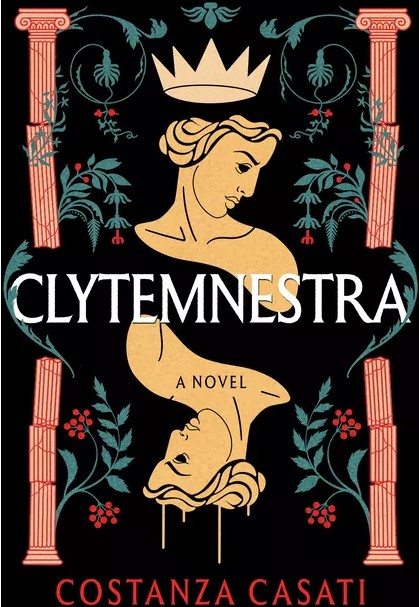
This book follows the story of Clytemnestra, the sister of Helen of Sparta. Helen is known as the most beautiful woman in Sparta, but her sister is the one with a mind as sharp as a knife and the will necessary to lead a nation. She is married off to a tyrant, yet retains her strong will. She is faced with the choice of acceptance versus vengeance upon the return of her husband, Agamemnon. This book hinges on the questions of if the wrath of the queen will be felt.
I have been reading a lot of Greek retellings lately, such as Song of Achilles by Madeline Miller. The majority of the retellings I have read have been from the point of view of those individuals viewed as secondary characters in the Greek myths. It is rare that we get a myth from the perspective of the women who were centered in these myths. It has been nice seeing the secondary characters and women fleshed out. it adds another dimension to these myths that typically center around the male hero.
I really enjoyed the characters in the story and seeing their development over time. It was nice being able to have a more in depth look at the women in the myths and their lives. It adds to a better understanding of why they made the choices that they made and adds an extra layer to the myths that we already know. Already having read Song of Achilles, I knew the myth of the war, so this really added an extra layer to my understanding and appreciation for the myth tha these books were based on. The best part of this book though is that it is not necessary to have a background in mythology, but knowing the myth already did add to the impact of getting to read the story from the women who lived through the war.
The story was well written and captivating. I had trouble putting it down. It was a heavy book with topics such as rape, child abuse and murder. he theme of the novel, acceptance versus vengeance, is well conveyed throughout the novel. While the ending was satisfying and wrapped up all the plot points, it left me wanting more. I was not ready to part with Clytemnestra and her family, even though I found the book to be slow in the beginning.
I highly recommend this book to anyone who enjoys Greek mythology. I would rate this book as a full 5 out of 5 stars due to the fantastic original storytelling of a classic myth. It also left me wanting more Greek retellings in general, which led to me reading Stone Blind by Natalie Haynes.
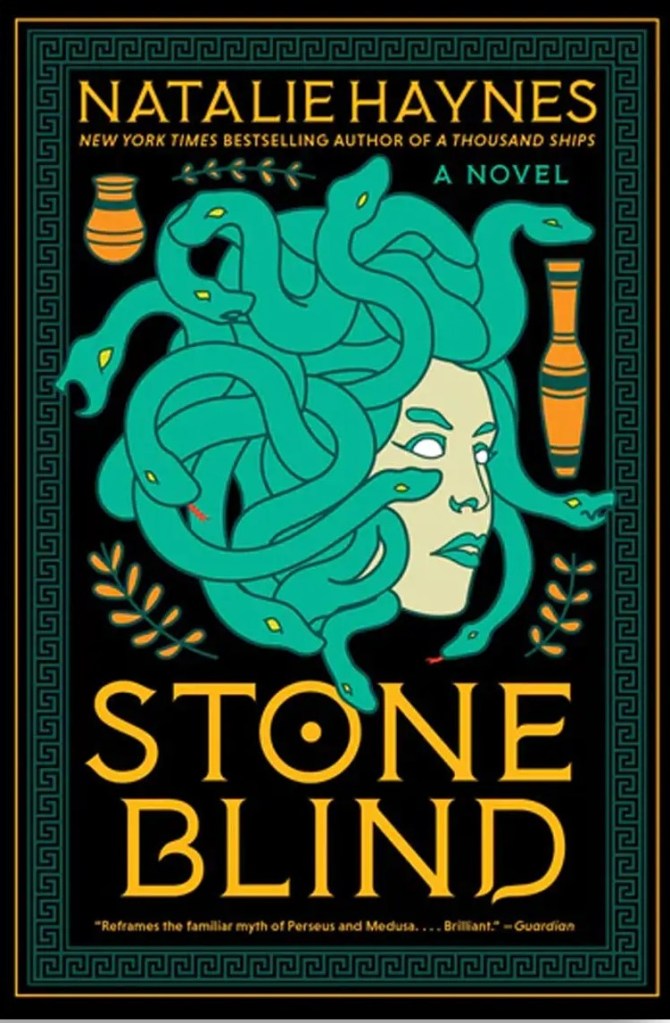
So like I said, reading Clytemnestra left me wanting more Greek mythology retellings, so I can’t explain how happy I was when I got the Libby notification that my hold for Stone Blind by Natalie Haynes was ready. Like most other Greek tales the story of Perseus defeating Medusa is told from Perseus’, the hero, point of view. This is a retelling of the real story. Perseus is just a young, determined, hubristic man who thinks he can do no wrong. The story gives the background of both the “hero” and he “monster,” Medusa. Revisit a classic myth from a new point of view.
Similar to other retellings that have been published lately, but I feel like this one has been my favorite so far. I enjoyed the multiple points of view that were used to tell the full story of Perseus’ journey and also gave more background about Medusa and her family. The characters were compelling and each point of view was unique. The most notable character is the Gorgeion, Medusa’s severed head. It was witty and while the narrator was biases, extremely entertaining. Having Perseus framed as an incompetent adventurer who was only able to achieve his goal with the help of the Gods was an interesting juxtaposition to how he is normally portrayed.
The story was really good and similar to Clytemnestra focused a lot on acceptance versus vengeance. Perseus is vengeful while Medusa and her head are accepting of their fate. It was interesting to see a few different Greek myths pulled together to tell this story and interesting to see how they all fit into a cohesive timeline. The story was well paced. Being told from different points of view helped to keep the pace acceptable because as son as one narrator started to get boring it would switch to someone new.
As much as I liked this book there was one part I did not like. Athene’s side story about her issues with Hephaestus was not interesting to me and did not seem to add much to the story at the time, though in the end it did make sense why her point of view was included. Due to my dislike for the side story line I would give this book a 4 out of 5 stars. I was slightly confused at first because I did not have any background knowledge on this myth but everything became more clear as the story went on. Like with Clytemnestra, I would recommend this book for anyone who likes mythology retellings.
 V Bookish
Leave a comment